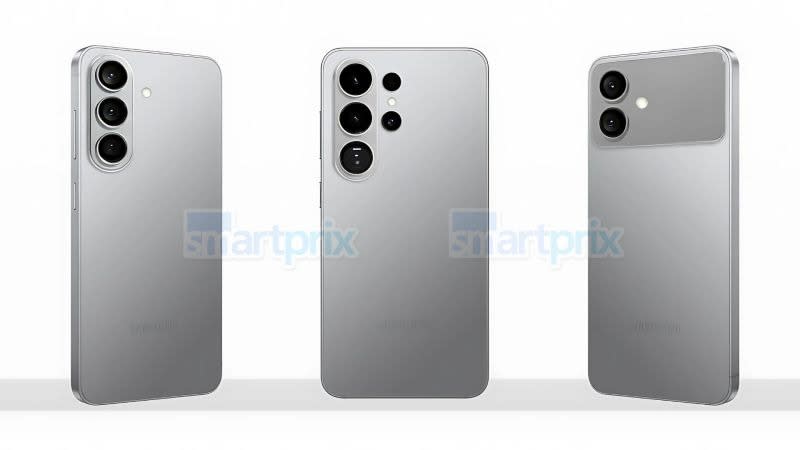
Galaxy S26+ Rumors Hint at a Safer Design: What It Means for Android Phone Buyers in 2026
Samsung’s Galaxy S-series has long been a bellwether for Android phone design, and a new report suggests the upcoming Galaxy S26+ nearly adopted a more dramatic, “Edge-style” display approach—before shifting to something more conventional.
If true, that decision says a lot about where Android flagship phones are headed in 2026: fewer risky flourishes, more incremental refinement. Here’s what that could mean for real-world usability, upgrade decisions, and what to look for when shopping your next Android phone.
The return (and retreat) of “Edge” design
Samsung’s classic “Edge” look—characterized by aggressively curved glass that wraps around the sides—was once a signature feature. It made phones look futuristic on store shelves, but it also came with trade-offs:
- Accidental touches and weird palm rejection moments
- Glare and reflections on curved edges
- More expensive repairs due to complex glass shaping
- Screen protectors that never fit quite right
The latest rumor indicates the Galaxy S26+ may have nearly brought back an Edge-like display concept but ended up with a more restrained design instead. In other words: less “wow” factor, more practicality.
From an everyday Android user perspective, that’s not necessarily a bad thing.
Why “more boring” can actually be better
Phone design “excitement” often peaks at launch-day photos—not after six months of ownership. If Samsung is leaning into a flatter, simpler front design for the S26+, these are the benefits that typically follow:
1) Better durability and easier repairs
Flatter panels and less extreme curvature generally reduce:
- Drop-related cracking on edge impact
- Repair complexity (and sometimes cost)
2) Improved usability for gaming and typing
Curves can slightly distort the touch plane near the edges. Many users find flatter displays more comfortable for:
- Landscape gaming
- Fast typing and gesture navigation
- Accurate taps on UI elements near the edge
3) Accessories finally work as intended
A “boring” screen shape usually means:
- Screen protectors adhere better
- Cases provide more consistent edge protection
- Fewer compromises between looks and safety
If you’ve ever fought bubbling protectors or fragile edge glass, a “normal” display starts to sound like a feature.
What this suggests about Samsung’s strategy (and Android trends)
Across the Android ecosystem, we’ve been seeing a broader shift:
- Hardware differentiation is harder: Most flagships are already fast, bright, and capable.
- Software and AI features are the new battleground: On-device AI, camera processing, battery optimization, and long-term updates matter more each year.
- Design risks don’t always pay off: Consumers are increasingly skeptical of features that look premium but add fragility.
If the Galaxy S26+ is indeed moving toward a safer design, it may signal Samsung prioritizing:
- Wider appeal
- Better durability
- More predictable manufacturing and quality control
In practical terms, expect marketing to focus less on “revolutionary curves” and more on camera improvements, AI features, battery life, and update policy.
Buying advice: should you wait for the Galaxy S26+?
If you’re choosing between a current Android flagship and waiting for the S26+ generation, use this checklist:
Wait for S26+ if you care most about…
- Long-term software support (newer models often extend the update runway)
- Efficiency improvements (chipset and modem upgrades can boost battery life)
- Refined design (better durability, less accidental input)
Buy now (or grab a discount) if…
- You can get a strong deal on the current Galaxy S-series
- You already like your phone’s design and just want a reliable upgrade
- You value proven hardware over first-gen changes
Tip: If Samsung truly goes more conservative on the S26+, that could make older “flashier” designs (including curved models) a niche preference rather than the mainstream default—potentially improving resale value for certain variants, but also making repairs/accessories harder long-term.
What to look for in an Android phone beyond the design
A sleek display is only one part of the experience. When comparing Android phones in 2026, prioritize:
- Update policy: How many OS upgrades and security patches?
- Battery health features: Smart charging limits, adaptive charging, and battery replacement cost
- Camera consistency: Not just the main sensor—ultrawide and zoom quality matter
- Display practicality: Brightness outdoors, PWM flicker sensitivity, and touch accuracy
- Repair ecosystem: Parts availability, warranty coverage, and screen replacement pricing
A “boring” phone that’s easy to live with often beats an exciting one that’s expensive to maintain.
Bottom line
If the Galaxy S26+ really backed away from an Edge-like display, it may disappoint fans hoping for a bold visual refresh—but it could be great news for everyone who prioritizes durability, accessory compatibility, and day-to-day usability.
As Android phones mature, the winners won’t just be the most eye-catching devices—they’ll be the ones that feel effortless to own.